
THE SHINING STARS
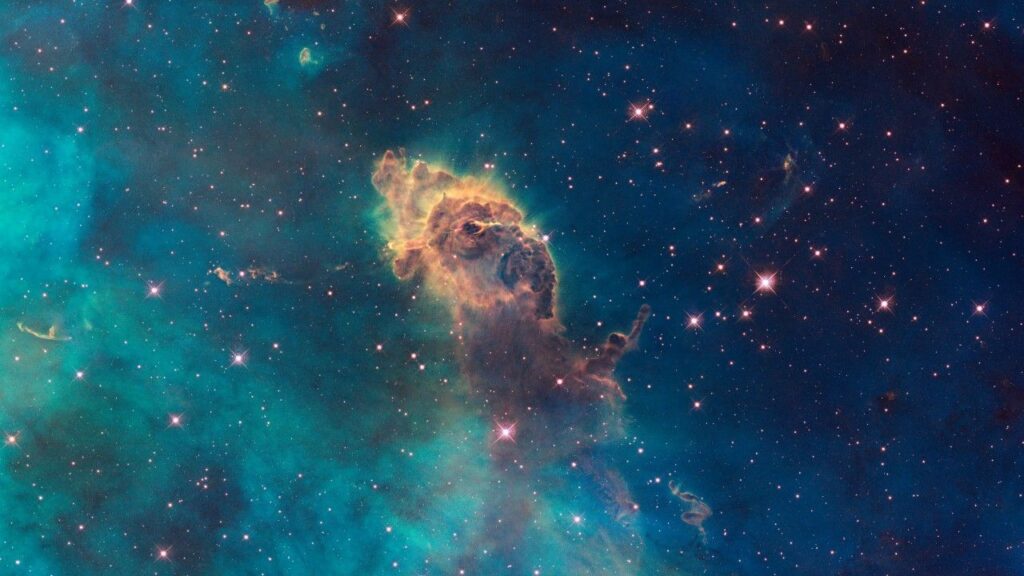
Looking up at the sky on a clear night, the view is typically one lite with millions of brilliant sparking stars. Some stars are bigger and some are smaller, some are hotter and some are cooler. Stars are shine because they are extremely hot. Stars are huge celestial bodies made mostly of hydrogen and helium that produce light and heat from the churning nuclear forages inside their cores.
The life cycle of a star spans billions of years. Formation of stars depletes the interstellar medium. Star formation take place inside the hydrogen-based dust clouds called as nebulae. Over the thousands of years, gravity causes pockets of dense matter inside the nebulae, to collapse under their own weight. One of these contracting masses of gas known as protostar. As a protostar gets smaller, first it spin slowly and due to its own gravitational pull it and shrinks. Then it spin more and more faster with the outer parts becoming as disk while the inner most parts become a roughly spherical clump. When spinning the temperature increases and it creates rising in the temperature. After millions of years later, when the core temperature reaches about 27 million degrees Fahrenheit. Automic nuclear that normally repel each other start fusing together and the star ignites.
The structure of stars known as a series of thin nested shells. The main-sequence star consist of three pars; core, radiative zone and convective zones. The core where all the nuclear fusion takes places to power a star. In the radiative zone, the energy is transported outward by radiation and in convective zone, energy is transported by the roiling hot gasses. The lifecycle of stars are based on mostly their initial mass. It include intermediate mass stars, high mass stars and low mass stars. Generally the greater a star’s mass, the shorter its life pan. The mass of star measure the terms of the solar-mass. The surface temperature of a star is depends on its mass and it affects the colour and brightness of star. The surface temperature measured in Kelvin.
Some stars shine more brightly some are not; brightness of stars are known as term of magnitude and luminosity. The magnitude is based on their brightness as seen from earth, brightest one known as first magnitude stars, the next brighter were second magnitude stars like wise there are six magnitude stars. Luminosity is power of star or the rate of energy emitting by stars. The luminosity of stars are measured in terms of the luminosity of sun. The brightness of star depends on its surface temperature and size. The colour of stars are depends on the surface temperature of stars. Temperature differences vary the colour of the star. Hot stars appear in blue or white and cooler star appear as orange or red hues. A star might be appear to have a single colour but the stars emit a broad spectrum of colours. Different compounds or elements in the stars are absorb and emits the different colours and wavelength of light. These spectrum are used to classify the stars typically. Known as Morgan- Keenan system. There are eight spectral classes and each class consist ten spectral types. Size of star is measured in unit radius and size affects the brightness of the star.
Stars spend 90% of their lives in their main sequence space. The star’s end of life also depends on the mass of star. As stars move toward the ends of their lives much of their hydrogen has been converted into helium; helium sinks to the star’s core and rises the star’s temperature and the outer layers collapsed.
Author : RAKSHANA MUHAJIREEN
BATCH 7
OBSERVATION DIVISION – SEDS